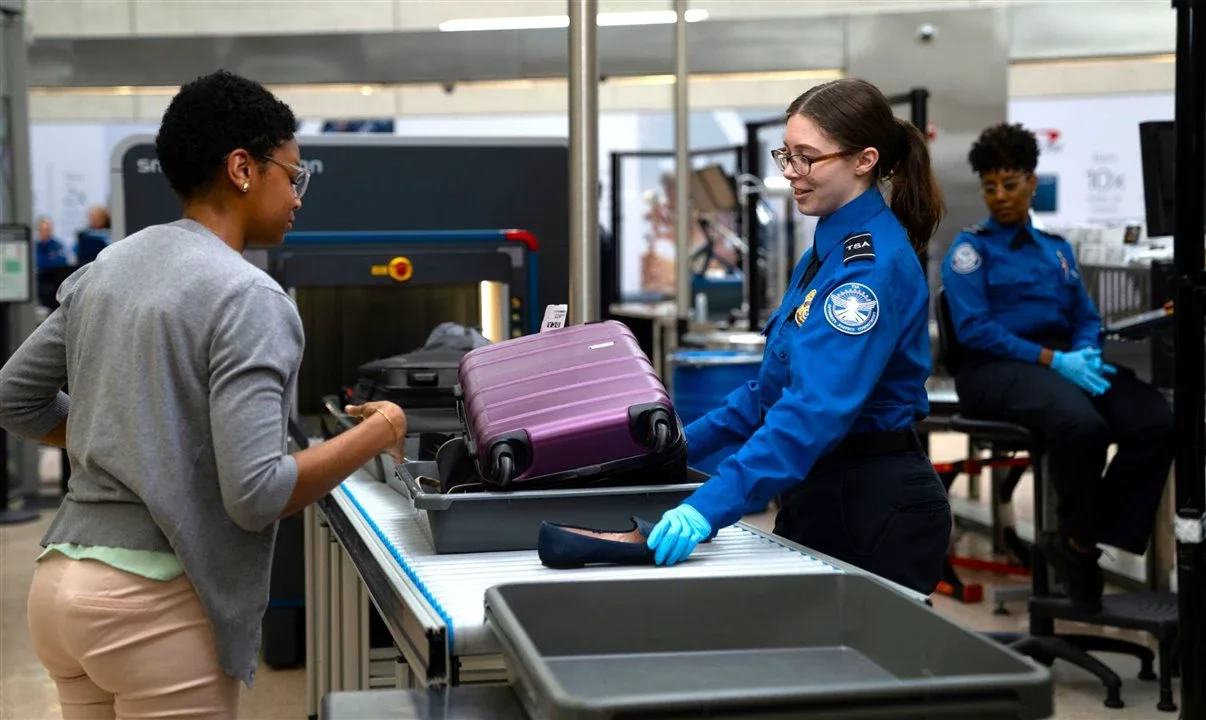
The US Transportation Security Administration (TSA) has announced that, at selected airports, people without an airline ticket will be allowed to pass through security and accompany relatives or friends to areas near departure gates.
The measure will initially apply to people enrolled in TSA PreCheck, a programme for travellers who have already undergone background screening and are eligible for faster security procedures.
Those wishing to enter departure areas without travelling will need to apply for permission in advance, between one and three days before their planned visit. The programme is expected to be available initially at 13 US airports.
The change restores a practice that was common before the September 11 attacks, when relatives and friends could accompany passengers to boarding gates.
Another measure under consideration could allow some passengers to carry full bottles of water through airport security.
Restrictions on liquids were tightened after a foiled terrorist plot in the United Kingdom in 2006, in which suspects planned to conceal liquid explosives in drink containers.
According to aviation security experts, the possible easing of these rules has been made possible by improvements in screening technology.
New computed tomography systems can analyse the contents of luggage in greater detail and improve the detection of potentially dangerous materials, including liquid explosives.
The changes follow another recent move by US authorities to end, in some circumstances, the requirement for passengers to remove their shoes during security screening, a rule that had been in place for around two decades.
Experts stress that the changes do not necessarily represent a reduction in security standards, as procedures are being adjusted to reflect the capabilities of newer screening equipment and pre-screening systems for travellers.
For now, the new policies apply only in the United States. Airport security rules vary from country to country, and any changes elsewhere would depend on national aviation and security authorities.
However, because of the influence of the United States on international aviation, major changes at US airports could encourage wider debate about security practices adopted globally after the September 11 attacks.
If the new procedures prove effective without compromising security, other countries may consider similar measures, particularly as they replace older screening equipment with more advanced technology.
The changes represent one of the most significant reviews of US airport security practices in decades and show how technology is beginning to reshape rules that have defined air travel since the early 2000s.