The decision is outlined in Ministerial Diploma No. 88/2026, dated 28 October, published in the Official Gazette and signed by Minister of Economy Basílio Muhate. The regulation establishes a temporary import restriction regime for an initial period of 12 months, which may be extended following an assessment of its impact on the market.
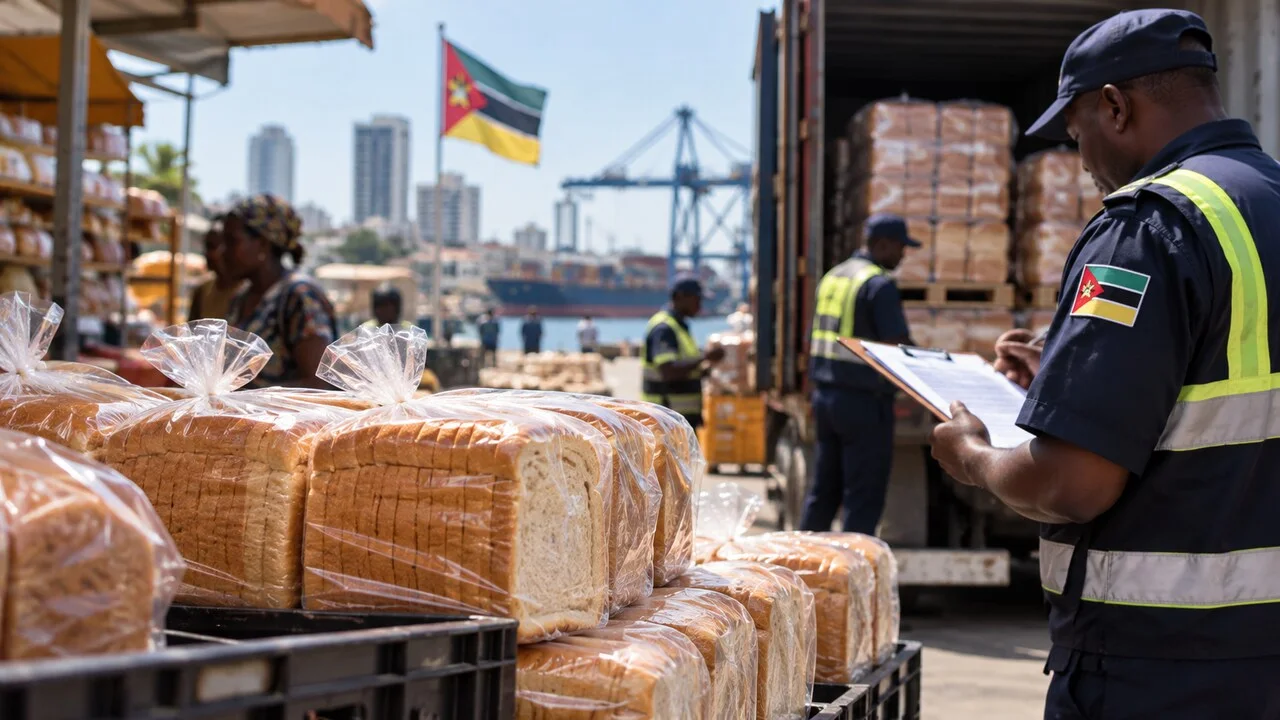
Under the new legislation, sliced bread imports will no longer be unrestricted and will only be authorised when domestic production is insufficient to meet market demand.
"The importation of sliced bread is intended exclusively to supplement domestic supply," the document states, specifying that authorised import volumes must not exceed the difference between market demand and the actual availability of locally produced bread.
Through this measure, the Government aims to reduce dependence on imports, strengthen the competitiveness of domestic businesses and increase the participation of Mozambican producers in supplying the national market.
One of the main changes is the introduction of mandatory registration and prior licensing for economic operators wishing to import sliced bread. Licences will be granted based on an assessment of market requirements, domestic production capacity and the potential impact of imports on the local industry.
Importers will be required to submit specific documentation, including an importer registration card and an annual import plan. Applications may be rejected for failure to meet legal requirements, risks of market distortion or the submission of false information.
The new regime also introduces an import fee equivalent to ten minimum wages applicable to the public sector for each tonne of sliced bread imported. Payment will be mandatory before a licence is issued and will not replace customs duties, Value Added Tax (VAT) or other legally applicable charges.
Enforcement of the new regulations will be carried out by the Tax Authority, through the Directorate-General of Customs, and the Inspectorate-General for Food Safety and Economic Activities (IGSAE). These institutions will be responsible for verifying the legality of import operations, product compliance and adherence to commercial and health standards.
The legislation provides for penalties against operators who violate the restrictions, including fines equivalent to 100 public-sector minimum wages for each tonne imported unlawfully.
In cases of repeated violations, document fraud or other serious offences, penalties may include the seizure of goods, suspension of business activities for three years, revocation of import licences and a ban on entering into contracts with the State for the same period, where provided for by law.
The decision comes amid an increase in sliced bread imports. Between 2023 and 2025, imported volumes reportedly rose by approximately 70%, from around 1,100 tonnes to 1,900 tonnes, according to figures released for the sector.
The Government believes that strengthening domestic production could help stimulate the bakery industry, encourage greater use of existing production capacity and create more favourable conditions for the development of local businesses.
However, implementation of the restrictions will also have to take into account market supply requirements and consumer protection, with the aim of preventing shortages or significant disruptions to market operations.
The new regime will apply to imports regardless of their country of origin, while respecting specific provisions contained in international agreements ratified by Mozambique.
Any extension of the measures will depend on an assessment of the results achieved, particularly regarding growth in domestic production, import trends and the country's ability to ensure a consistent supply of sliced bread to the Mozambican market.