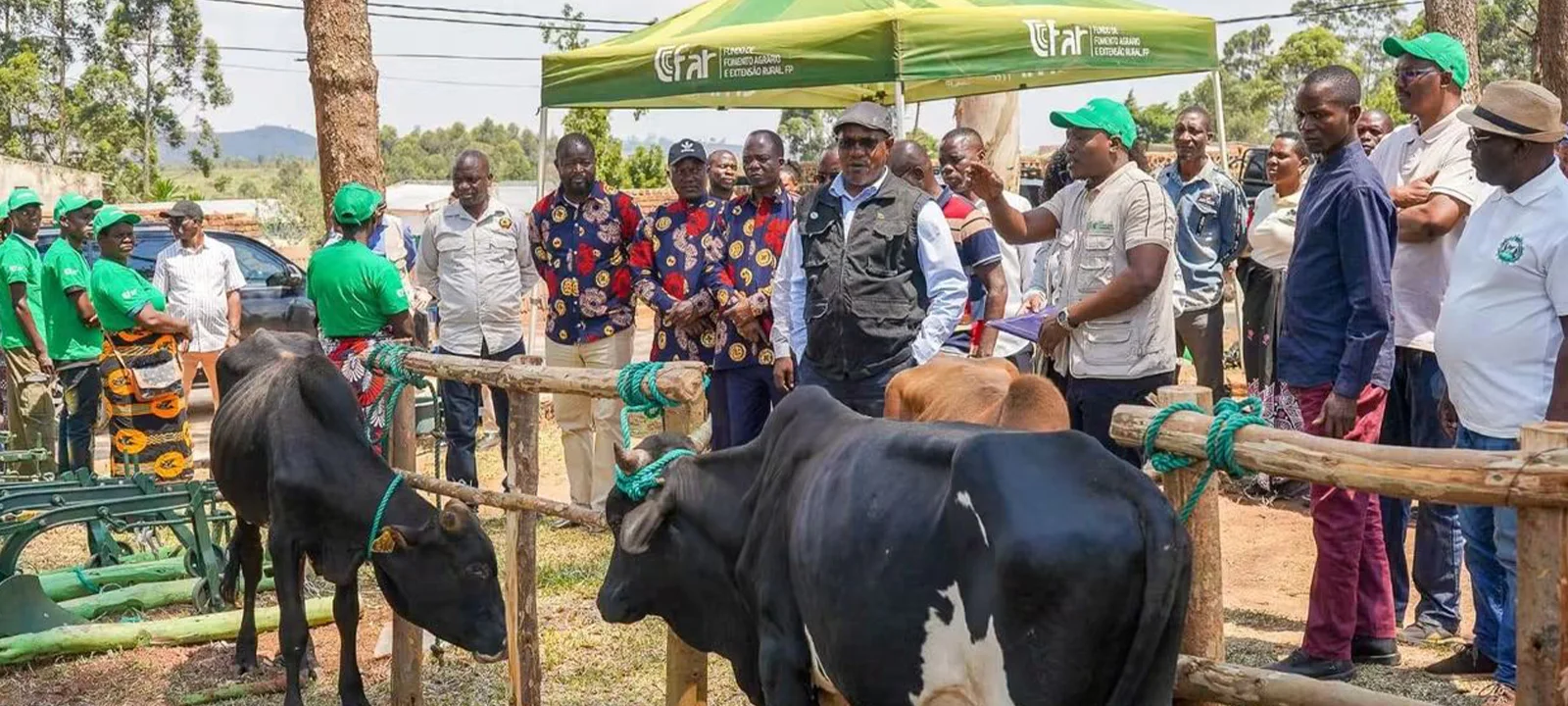
The initiative forms part of efforts to modernise family farming by introducing animal traction as an alternative to traditional manual farming methods, allowing farmers to cultivate larger areas of land and improve productivity.
According to the newspaper O País, Tsangano district received 78 cattle, Angónia 60 and Macanga 42. Of the total animals distributed, 120 will be used for agricultural traction, while 60 female cattle have been allocated for breeding purposes to support the sustainability of livestock production.
Tete Governor Domingos Viola explained that the initiative seeks to facilitate the transition from traditional agriculture to semi-mechanised production systems, particularly in rural communities that continue to depend heavily on manual farming techniques.
According to the governor, animal traction could help farmers expand cultivated areas, reduce physical labour and lower expenses associated with hiring agricultural workers.
Viola urged beneficiaries to make responsible use of the animals to ensure that the initiative delivers measurable improvements in agricultural production and household incomes.
Tsangano, considered one of Tete province’s main agricultural production areas, is among the largest beneficiaries of the programme, having received 78 cattle.
One of the beneficiaries, farmer Alberto Luís, said the assistance represents an opportunity to reduce production costs, particularly expenses related to hiring workers for land preparation.
The cattle distribution is being carried out under the Inclusive Agri-Food Value Chain Development Programme (PROCAVA), an initiative designed to increase rural household incomes, strengthen food security and promote agricultural activities that are more resilient to the effects of climate change.
The programme is expected to cover 75 districts across Mozambique over a ten-year period, implemented in two phases, with a focus on developing agricultural value chains with the greatest economic potential in each region.
Key sectors covered by the programme include irrigated vegetable production, red meat, poultry farming, cassava and legumes, with particular emphasis on increasing productivity, diversifying agricultural output and improving smallholder farmers’ access to markets.
Through the introduction of animal traction, the provincial government hopes to enable more rural families to expand agricultural production and improve their incomes in a region where farming remains one of the main sources of livelihood for local communities.