The cooperation is intended to strengthen the security of digital services, improve information sharing between public institutions and reduce the need for citizens to repeatedly submit the same documents to different government agencies.
The initiative was discussed during a meeting in Maputo between Lourino Chemane, Chairman of the National Institute of Information and Communication Technologies (INTIC), and Cilair Rodrigues de Abreu, Executive Secretary of Brazil’s Ministry of Management and Innovation.
Key areas under discussion include data governance and protection, digital certification, system interoperability, cybersecurity and the training of Mozambican technical staff.
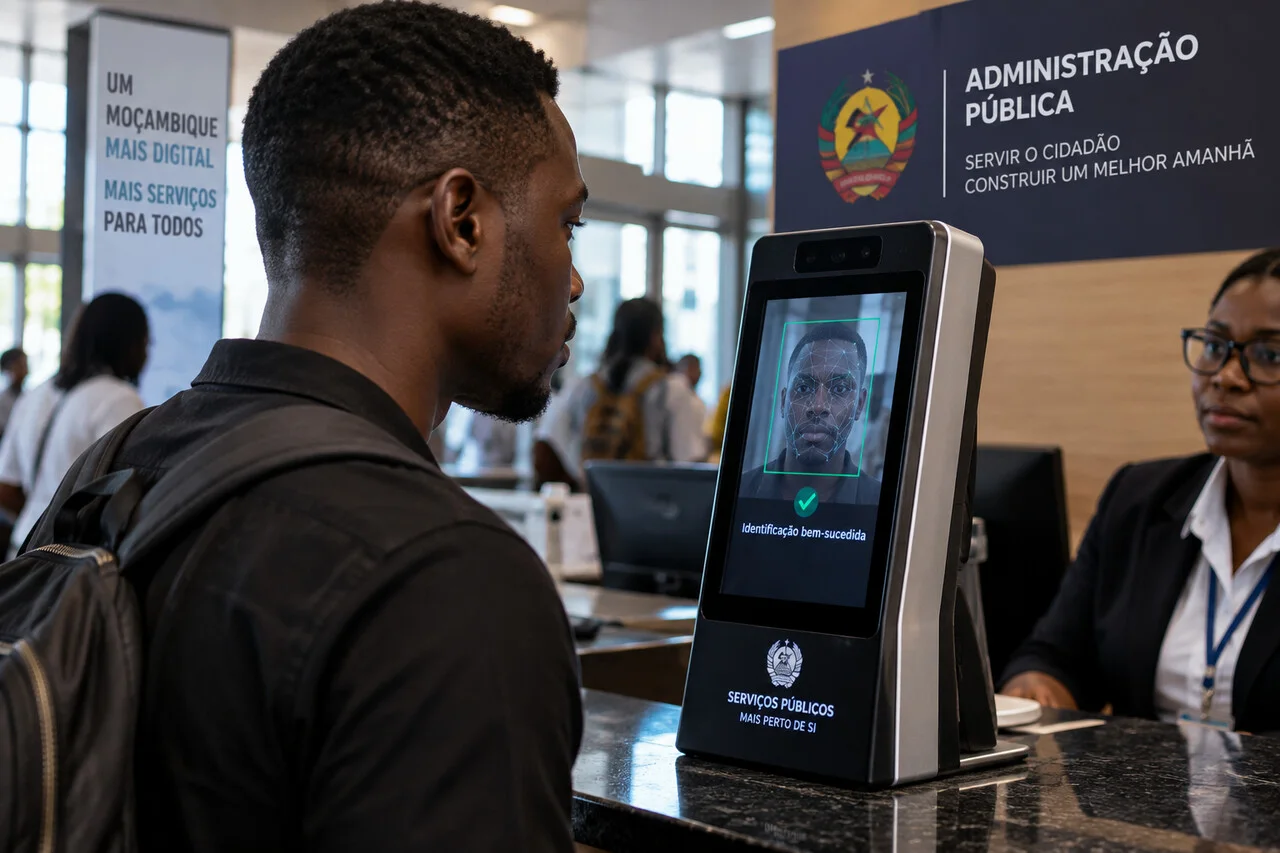
Brazil’s experience was presented as a reference for Mozambique’s digital transformation, including solutions such as the National Identity Card, which uses QR codes and biometrics, as well as facial recognition technologies designed to strengthen security and reduce fraud.
Another key area is data interoperability, which would allow different public institutions to communicate and share information through integrated systems.
In practice, this could reduce situations in which citizens are required to submit the same documents or provide the same information repeatedly to different state institutions.
The partnership also includes training Mozambican professionals to develop, manage, regulate and protect future digital platforms.
The initiative forms part of broader efforts to modernise Mozambique’s public administration and strengthen the country’s digital sovereignty.