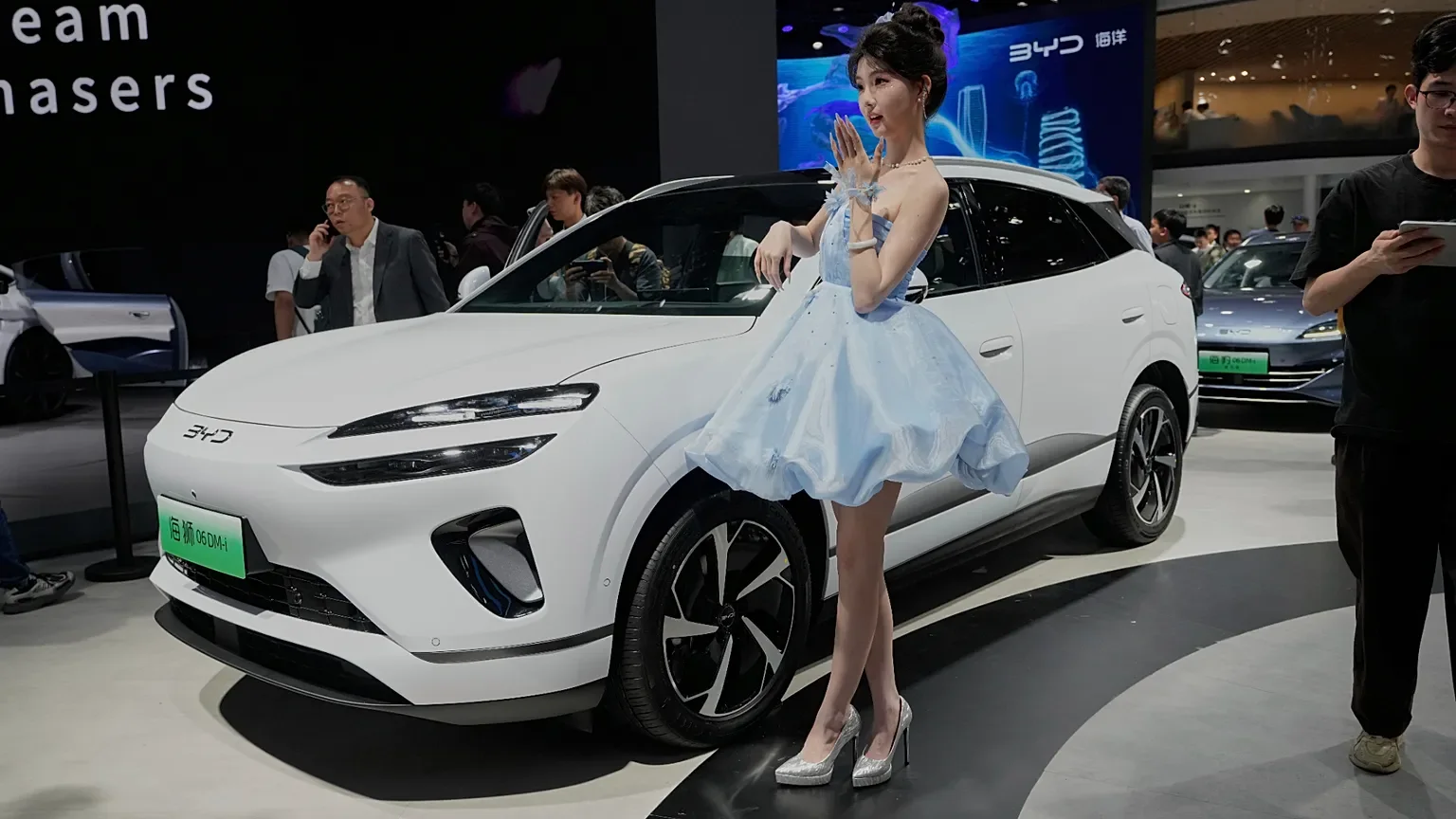
According to the Financial Times, Brussels has asked China to voluntarily reduce exports of these vehicles to the European market.
The EU reportedly wants the share of Chinese-made hybrids sold in the bloc to be limited to around 15%, compared with more than one-third currently.
Concerns have increased following a sharp rise in imports. Chinese-made hybrid vehicle imports reportedly grew from around 3,800 units in October 2024 to 50,000 in July this year.
Brussels fears that this rapid increase could place further pressure on Europe’s automotive industry, which has been facing difficulties and announcing job cuts.
“If they do not limit exports to our market, we will do it ourselves,” a European official was quoted as saying by the Financial Times.
In addition to cars, the European Union also wants China to moderate exports of other products, including chemicals, and increase purchases of European goods.
European Commission President Ursula von der Leyen recently said the EU’s trade deficit with China had reached a point that required new measures to rebalance economic relations.
EU Trade Commissioner Maroš Šefčovič is expected to travel to Beijing in October for talks with Chinese authorities.
The European Union is seeking a voluntary agreement similar to one reached with Japan in the 1980s, when Japanese manufacturers agreed to limit vehicle exports and later increased production in Europe.
Chinese hybrid cars are currently subject to a 10% tariff, while fully electric vehicles imported from China face additional duties introduced by the European Union in 2024.
Beijing rejects claims that the low prices of Chinese products are mainly the result of state subsidies, arguing instead that the competitiveness of Chinese companies is driven by efficiency.