The competitiveness of Mozambican companies remained at levels considered very weak in the first half of 2026, despite increased investment in capital assets across most of the sectors analysed.
The findings are contained in the Mozambique Business Competitiveness Index, presented on Friday in Maputo by the Foundation for Business Competitiveness, FUNDEC.
The presentation was delivered by Yuran, an economist at FUNDEC, who explained that the index stood at 36.09 points on a scale of 0 to 100, maintaining a CCC rating, corresponding to very weak performance and very high risk.
The report shows that six of the seven sectors analysed increased investment in capital assets. However, the rise in investment did not translate evenly into productivity gains.
“Investing more is necessary; investing better and using capital productively is the next step,” reads one of the conclusions presented in the study.
Agriculture recorded one of the strongest performances. Productivity per company increased by 80.11%, while productivity per worker rose by 94.41%.
The extractive industries also posted gains, with productivity per company increasing by 49.9% and productivity per worker by 54.19%.
The situation was different in other sectors. Productivity per company fell by 26.54% in manufacturing, 23.15% in trade and services, 9.52% in transport and logistics and 6.32% in construction and public works.
FUNDEC identifies the manufacturing sector as one of the main areas of concern. Despite a 5.14% increase in capital investment, productivity per company and per worker declined.
According to the analysis, these results show that simply increasing the amount of available capital is not enough to improve business competitiveness.
FUNDEC argues that investment must be accompanied by technology, modernisation of production processes, digitalisation, better equipment, energy efficiency, workforce skills development and innovation.
The report also points to a deterioration in access to and use of business credit.
Credit depth declined across all sectors analysed, with agriculture recording the sharpest fall at 28.84%. Manufacturing followed with a decline of 19.74%, while construction and public works fell by 16.04%.
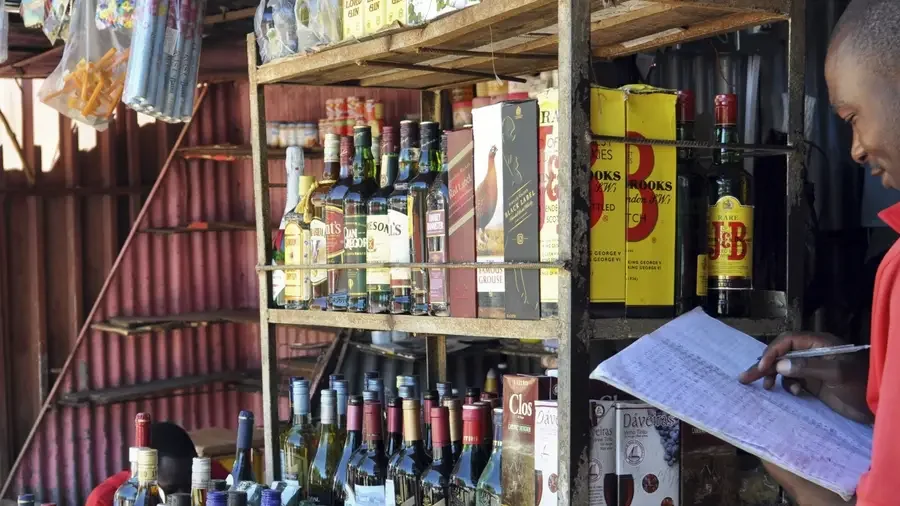
Imagem de apoio. A profundidade de crédito diminuiu em todos os sectores analisados, com a agricultura a registar a maior queda, de 28,84%.
FUNDEC considers that this broad decline may be linked to factors limiting companies’ use of credit or to the financial system’s capacity to expand financing for productive activity.
Financial intermediation also weakened in several sectors, signalling a weaker connection between business activity and the financial system.
Overall, the study describes an uneven business environment. Agriculture and extractive industries recorded strong productivity gains, while manufacturing, trade, logistics and construction posted declines.
“The challenge shifts from ‘how much capital do companies have?’ to ‘how efficiently do they transform capital into productivity, employment and added value?’” the report states.
According to FUNDEC, increased investment is a positive sign, but stronger competitiveness will depend mainly on the ability of Mozambican companies to transform that capital into production, jobs and greater added value.
#Negócios#Competitividade Empresarial Continua Fraca#Apesar do Aumento do Investimento.#Competitividade Empresarial de Moçambique#Competitividade Empresarial.#Competitividade#Investimento#Capital