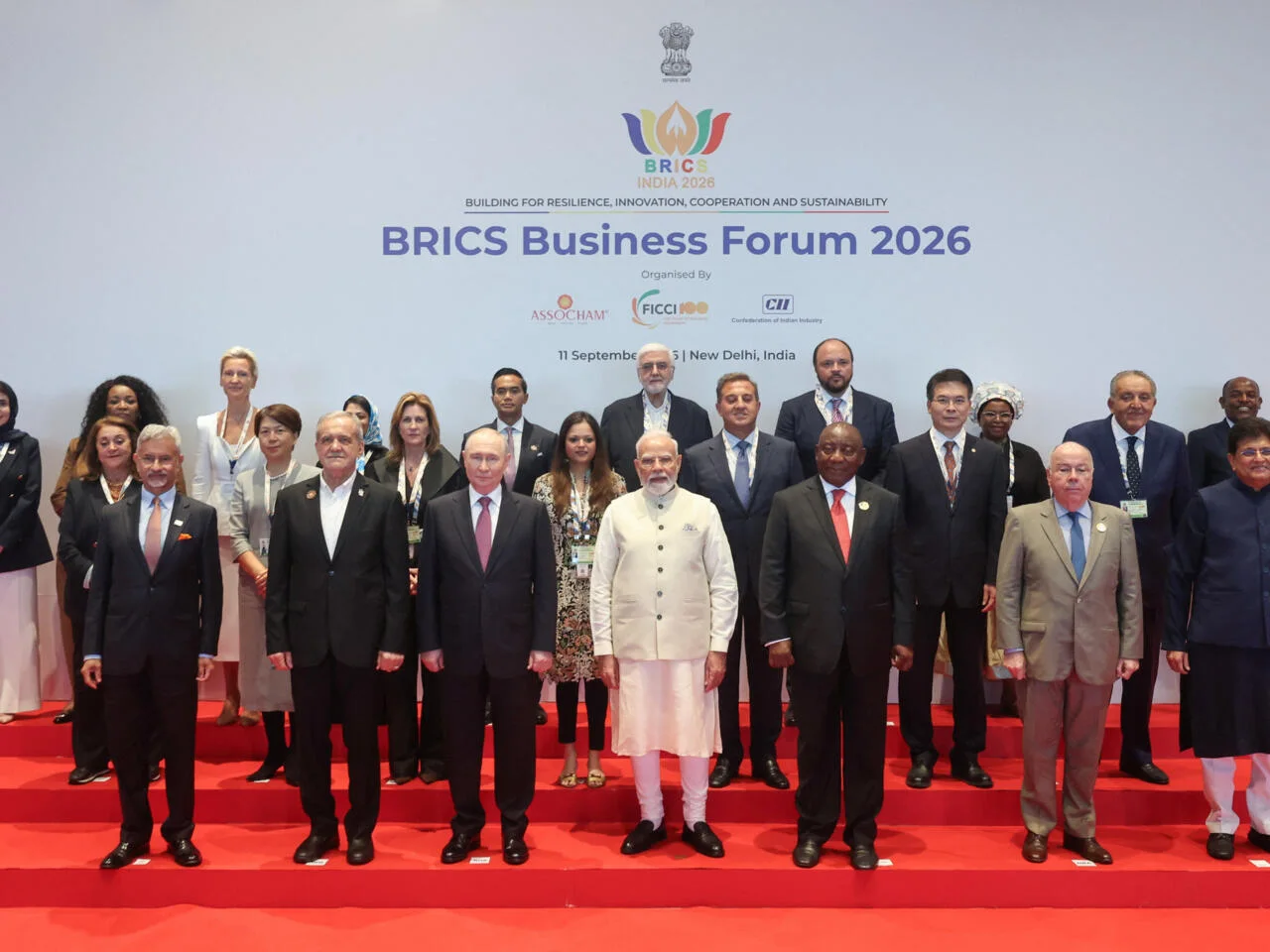
The call was made by Indian Prime Minister Narendra Modi during the BRICS summit in New Delhi, where he proposed the creation of a ten-point reform roadmap to be developed before the bloc’s next leaders’ summit.
Modi criticised the current structure of global governance, saying that decision-making power remains concentrated in the hands of a small number of countries, while many nations affected by those decisions have little influence over them.
“The current structure of global governance looks like a pyramid. Power and decision-making are concentrated at the top, while countries affected by those decisions are at the bottom and cannot influence them,” Modi said.
According to the Indian Prime Minister, the proposed roadmap should focus on three main areas: representation, responsiveness and participation in setting international rules.
Modi also called for reform of the United Nations Security Council, arguing that the process can no longer be delayed.
“Reform of the United Nations Security Council can no longer be postponed,” he said, calling for negotiations with clear timelines and concrete outcomes.
The Indian leader also urged changes to international financial institutions, including a more balanced distribution of voting power, leadership positions and financing priorities.
India argues that emerging economies should have influence that better reflects their growing contribution to the global economy.
Modi also called for a stronger voice for the Global South, saying these countries should not simply follow rules created by others but should participate directly in shaping them.
“The Global South is today on the front line of global crises, but on the back row of decision-making,” Modi said.
India, which currently holds the rotating BRICS presidency, is seeking to present the bloc as a platform for reforming international institutions rather than as an alliance created to confront other countries.
Modi stressed that BRICS “is not against anyone” and called for the current “pyramid of privilege” to be transformed into a “platform for partnership”.
The summit brought together leaders from several BRICS countries, including Chinese President Xi Jinping, Russian President Vladimir Putin and Iranian President Masoud Pezeshkian.
India’s proposal is expected to shape discussions among BRICS members on ways to increase the representation of emerging economies in the world’s main decision-making institutions.