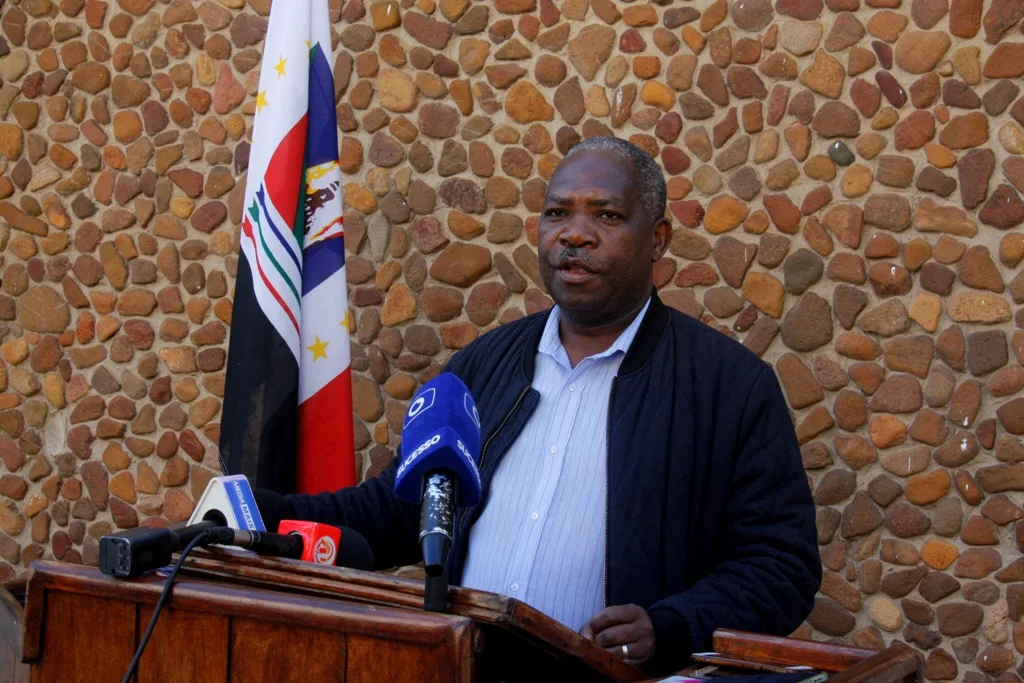
The expulsion was approved during the third ordinary session of the National Council, held in Maputo, following disciplinary proceedings concerning conduct that the party leadership considers contrary to its internal rules and principles.
According to Renamo spokesperson Marcial Macome, the measure was approved by a majority of voting council members, with the primary aim of preserving party discipline, cohesion and unity.
"We followed the rules," Macome stated, adding that disciplinary measures were intended to discourage behaviour that could deepen divisions within the organisation.
The decision comes at a time when António Muchanga has emerged as one of the most prominent voices opposing Ossufo Momade's leadership. In recent months, the former parliamentarian has publicly called for the Renamo president's resignation, aligning himself with factions demanding a renewal of the party's leadership.
Disagreements between Muchanga and the party leadership have also reached the courts. However, Marcial Macome clarified that ongoing judicial proceedings do not prevent the application of internal disciplinary sanctions, stressing that the expulsion does not automatically extend to other members associated with the internal opposition movement.
Reacting to the decision, António Muchanga told Miramar television that he would consult his lawyers to assess his next steps, without ruling out the possibility of launching his own political project.
"I am RENAMO; the decision has not yet taken effect," the politician said, expressing reservations about the implications of the resolution.
For his part, Ossufo Momade described the expulsion as a "difficult and painful" decision, while maintaining that the measure was necessary to protect the organisation during a period of internal disagreements.
The internal crisis coincides with ongoing discussions about Renamo's future leadership. At the conclusion of the National Council meeting, Ossufo Momade announced that the party's next congress is scheduled for the second half of 2027, contrary to demands from factions calling for the gathering to take place in 2026.
The decision to postpone the selection of a new leadership prolongs the internal power struggle within one of Mozambique's main political parties, which faces increasing pressure to reorganise its structures and restore confidence among its members and supporters.