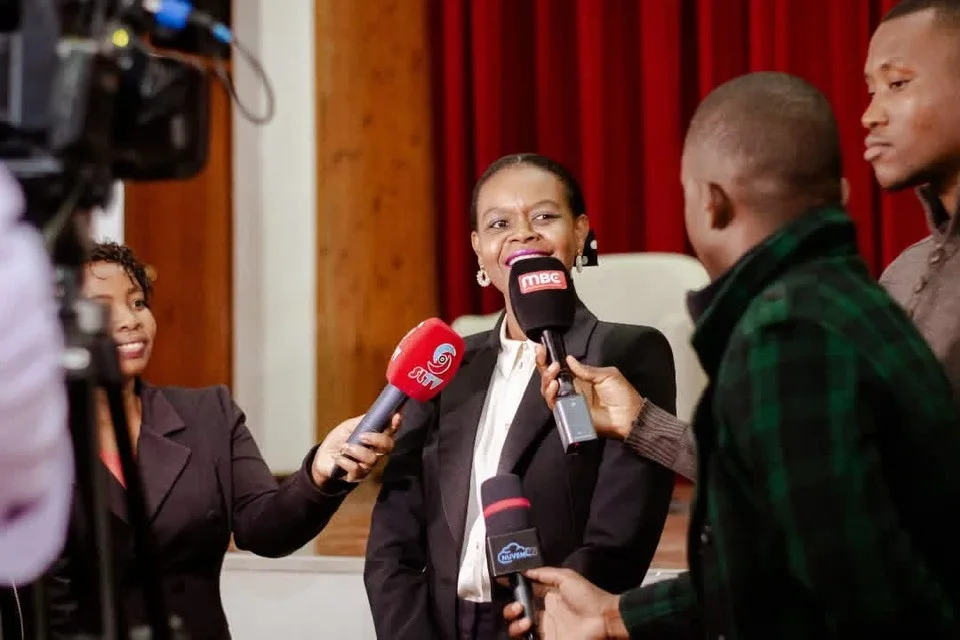
The position was expressed by OAM President Thera Tobias Dai in a message marking Peace Day, commemorated on 4 October.
According to Dai, peace should not be understood merely as the absence of armed conflict, but as a condition reflected in citizens’ daily lives through respect for human rights, participation in public life, protection under the law and the effective functioning of institutions.
She argued that the Constitution should serve as one of the main foundations of peace and guide both the exercise of power and the conduct of State institutions.
“Peace, from this perspective, requires authority, but authority exercised within legal limits; it requires freedom accompanied by responsibility and a justice system capable of ensuring that no one is above the law and no one is beneath its protection,” she said.
The OAM also considers it necessary to draw lessons from the events surrounding Mozambique’s 2024 electoral period and to strengthen the transparency, credibility and functioning of democratic institutions.
According to the association, national reconciliation should be built on truth, recognition of existing problems, correction of failures and the creation of safeguards to prevent similar situations from recurring.
On human rights, the OAM reiterated its call for investigations and accountability over possible violations of the law.
The association cited data from its Human Rights Commission concerning the 2024 electoral period, which recorded 4,236 detentions considered illegal, more than 3,000 people injured, 737 people shot and 323 deaths.
In light of these figures, the OAM argues that the public should be informed about investigations conducted, cases brought before the authorities and measures adopted to prevent similar incidents.
The organisation stressed, however, that it is not its role to identify those responsible or replace the Public Prosecutor’s Office and the courts, but rather to demand that reported incidents be investigated and that any offences established be dealt with in accordance with the law.
The OAM also maintains that the actions of the Defence and Security Forces must comply with the principles of legality, necessity and proportionality, while any alleged abuses should be investigated independently and promptly.
Dai further linked peace to social justice, pointing to poverty, unemployment, limited opportunities for young people, social inequalities and difficulties in accessing essential services as challenges affecting the stability and well-being of communities.
The association therefore called for public policies centred on citizens and greater investment in education, health, employment, social protection and justice.
The OAM President also highlighted structural challenges facing the justice system, including delays in legal proceedings, the cost of accessing courts, shortages of human resources, infrastructure limitations and the need for greater digitalisation.
According to Dai, investing in justice means strengthening democracy, legal certainty and peace itself.
“The Constitution does not belong to the Government, it does not belong to the opposition, it does not belong to the courts, it does not belong to the Police, and it does not belong to the Bar Association. It belongs to the Republic and binds us all,” she said.