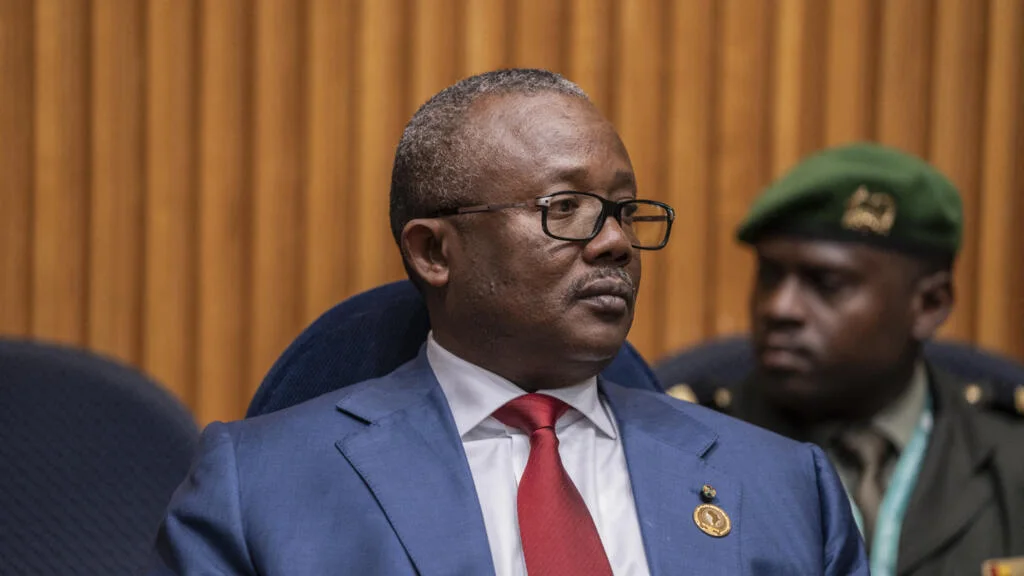
The decision was announced on Thursday, as Embaló had stated his intention to voluntarily return to Guinea-Bissau on Sunday, 4 October.
According to the Military High Command, the decision is based on national security concerns, the preservation of public order and the prevention of situations that could threaten stability and social peace.
The military authorities also reiterated that measures introduced under the political transition remain in force, including a ban on demonstrations, gatherings and other political assemblies until further notice.
The announcement came after supporters of Umaro Sissoco Embaló had begun mobilising to welcome the former head of state.
Earlier this week, Embaló announced his planned return to the country and later told Jeune Afrique that he intended to run in the presidential election scheduled for 6 December.
In response to the military's decision, a Facebook account attributed to Umaro Sissoco Embaló said the former President would wait for the restrictions to be lifted.
The same statement expressed hope that the judicial authorities would assess his potential candidacy impartially, independently and in accordance with the principles of justice.
Embaló also appealed to his supporters, sympathisers and other Guinean citizens to remain calm and avoid any behaviour that could lead to instability, insecurity or confrontation.
Umaro Sissoco Embaló was removed from power by the military on 26 November 2025, shortly before the announcement of provisional presidential election results.
The opposition described the military intervention at the time as a “ceremonial coup” and maintained that Fernando Dias da Costa had won the election in the first round.
The coup was led by General Horta Inta-a, Embaló's former head of presidential security.
Since then, Guinea-Bissau has remained under a military-led transitional administration, with restrictions on political activities still in place as the country prepares for a new electoral process.