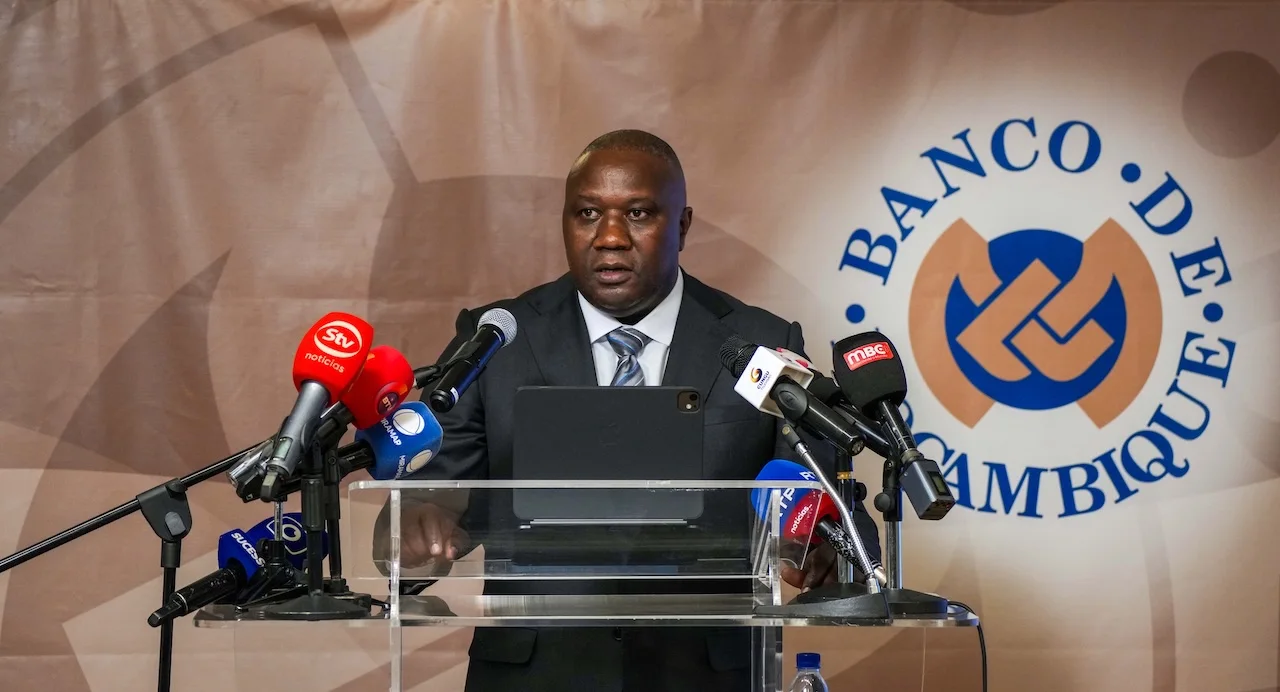
The new approach allows part of the funds that commercial banks are required to keep at the central bank to be channelled towards financing productive companies, in an attempt to bring monetary policy closer to the needs of the real economy.
The measure has been positively received by several economists, although they have also warned of the need to ensure that credit effectively reaches businesses, especially micro, small and medium-sized enterprises.
Economist Constantino Marrengula believes the initiative represents an important change in the use of mandatory reserves, which are no longer limited to managing banking liquidity but can also serve as a mechanism for transmitting monetary policy to the real economy.
Marrengula warns, however, that the main challenge will be ensuring that the financial system succeeds in extending credit to small businesses and the informal economy, which continue to face significant barriers to financing.
According to the economist, for many small businesses the problem is not only the cost of credit, but also the lack of collateral, robust financial statements and banking history needed to qualify for loans.
Marrengula therefore advocates financing mechanisms based on cash flows, contracts, transactions and value chains, including solutions that can support the transition of viable informal businesses into the formal economy.
He also believes the new approach could be used to support food supply chains, increase domestic production and help reduce pressure on food prices.
In his assessment, the success of the measure should be judged by whether credit reaches producers, including small farmers, and whether that liquidity translates into greater production, job creation and increased food supply.
Economist Eduardo Sengo also believes the decision represents an attempt to make monetary policy more targeted towards productive sectors. In his view, stabilisation policies should not be limited to controlling interest rates, but should also influence how credit is distributed across the economy.
Sengo notes that sectors such as agriculture and industry have lost ground in the distribution of bank credit. According to him, lending to these sectors, which once represented about half of total credit, has now fallen to approximately 15%.
For Sengo, the Bank of Mozambique's new direction could help increase domestic production, replace imports, strengthen exports, create jobs and improve the availability of foreign currency in the market.
Economist Júlio Saramala also assessed the measure positively, saying the new approach seeks to combine prudence in liquidity management with the need to direct resources towards productive activities.
Saramala warns, however, that it will be essential to establish clear criteria, monitor banks' compliance and assess how much of the released liquidity actually reaches companies and whether it has an impact on investment, production and exports.
Alfredo Mondlane, meanwhile, considers the measure a sign of change in the conduct of monetary policy, although he warns that its short-term impact may be limited because of the weak financial position of many companies that could potentially benefit.
He argues that the new regime should include mechanisms to strengthen and restructure companies' balance sheets, allowing more businesses to become eligible for bank financing.
Through this approach, the Bank of Mozambique is seeking to use monetary policy not only to manage liquidity and inflation, but also to stimulate sectors capable of increasing domestic production, reducing imports and strengthening exports.