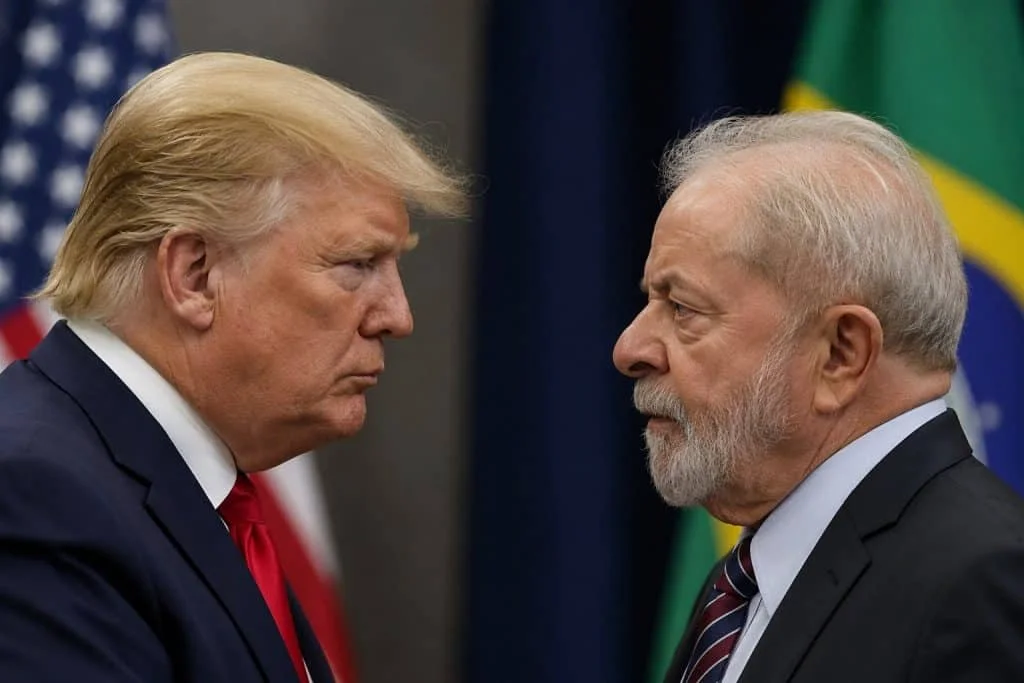
According to results released by Brazil's Superior Electoral Court (TSE), Flávio Bolsonaro secured 117 votes, representing 52% of valid ballots, while Lula, the Workers' Party (PT) candidate, received 108 votes, equivalent to 48%.
Voting took place at a single polling station in Maputo, where 556 Brazilian citizens were registered to vote. Of these, only 233 cast their ballots, representing a turnout of 41.9%, while abstention reached 58.1%.
Of the ballots cast, 225 were considered valid, while seven were declared invalid and one was left blank.
The result confirms the preference for Flávio Bolsonaro already demonstrated by Brazilian voters living in Mozambique during the first round of the election on 4 October.
At that stage, the PL candidate received 113 votes, compared with Lula's 89. Although Bolsonaro maintained his lead in the runoff, his advantage narrowed from 24 votes to just nine, as the incumbent President gained 19 additional votes between the two rounds, while his opponent gained only four.
The voting pattern in Mozambique also reflects the trend observed in Brazil's 2022 presidential election, when Jair Bolsonaro, Flávio Bolsonaro's father, received the highest number of votes among Brazilian citizens residing in the country.
Overview: How Did Brazilians Vote Abroad?
Voting among Brazilian citizens living overseas produced contrasting results for the two presidential candidates. Flávio Bolsonaro secured majorities in several countries across Asia, Africa and the Middle East, while Lula recorded victories in parts of Europe, Oceania and other regions.
According to results released throughout 25 October, Flávio Bolsonaro won in Japan, securing 80.08% of valid votes, equivalent to 28,538 ballots, compared with Lula's 7,098.
The PL candidate also led in Israel, with 80.81%, South Africa, with 57.92%, and the United Arab Emirates, where he received 54.56%. In Mozambique, the contest was considerably tighter, with Bolsonaro securing 52% of valid votes.
Meanwhile, Lula achieved significant victories in countries such as New Zealand, where he received 80.54% of the vote, and Australia, with 63.46%. In China, the Brazilian President secured 73.67%, while in Finland he obtained 74.83%.
The PT candidate also won in France and Spain, according to partial results reported by Brazilian media.
According to TSE figures, approximately 918,876 Brazilian citizens were eligible to vote abroad in the 2026 presidential election, across 186 cities in 134 countries.
Results were released progressively throughout 25 October because of differences in time zones. Polling stations in Asia and Oceania closed earlier than those in the Americas, allowing the voting preferences of some overseas Brazilian communities to become known before the conclusion of voting elsewhere.
Despite their political significance, votes cast abroad represent just over 0.5% of Brazil's total electorate. Consequently, victories recorded in individual countries cannot, on their own, predict the overall outcome of the presidential election.
The international results reported reflect polling station records and vote counts released during the day and do not constitute a final tally of all overseas ballots.