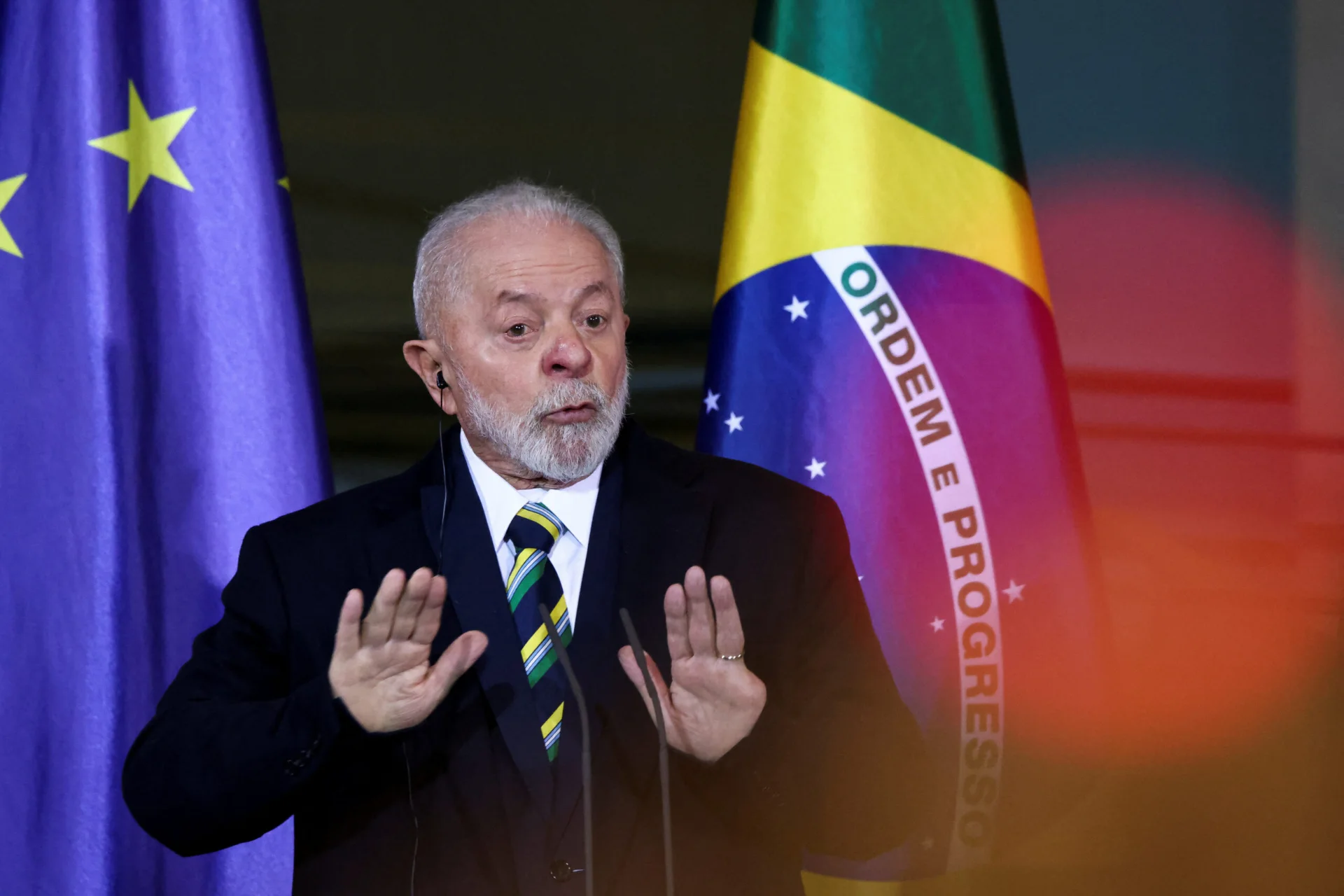
The remarks came a day after the presidential run-off, in which Lula, representing the Workers’ Party (PT), defeated Flávio Bolsonaro of the Liberal Party (PL) by approximately 4.4 million votes.
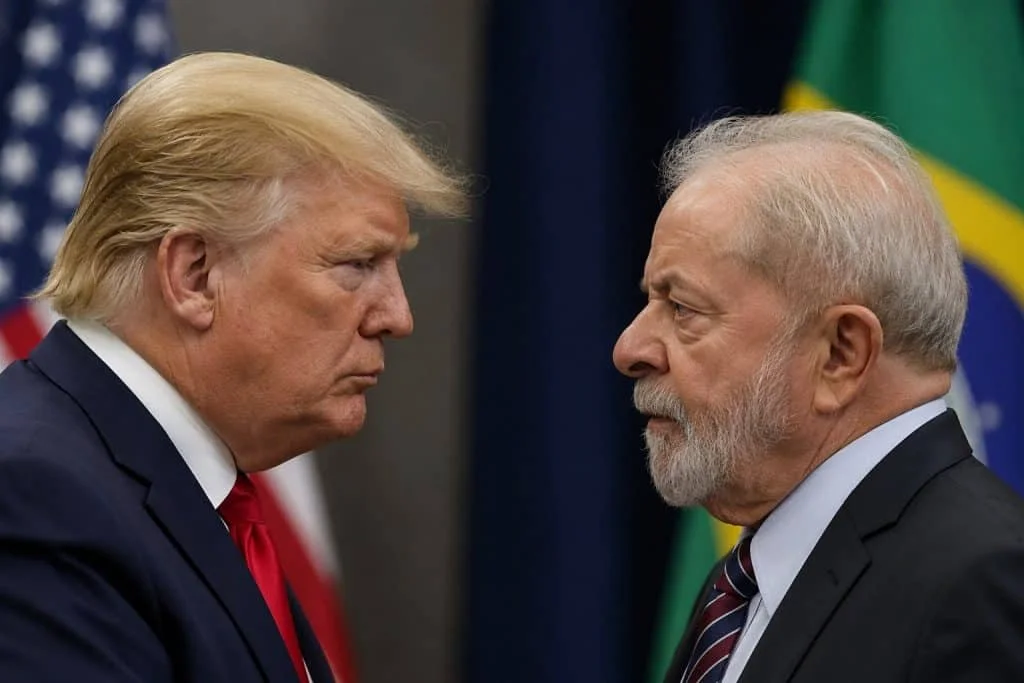
“I did not take sides, but it looked like another fraudulent election,” Trump told reporters, expressing doubts about how the voting process had been conducted.
The US President was particularly critical of the Brazilian Supreme Federal Court’s (STF) decision to extend voting hours by two hours, a measure introduced following public transport disruptions in several parts of the country.
“It looked terrible to me. It looked like another fraudulent election, frankly. I did not take sides, but it was a terrible look,” Trump said, according to international media reports.
Despite criticising the electoral process, Trump sought to distance himself from any direct confrontation with the Brazilian President, stressing that he maintained a positive personal relationship with Lula.
“I do not govern Brazil. I govern the United States. I like Lula. I get along very well with him, but the extension granted was very strange,” he added.
The controversy emerged after the Supreme Federal Court authorised voting to continue until 7 p.m., two hours beyond the usual closing time.
The decision followed reports that voters in several regions were experiencing difficulties reaching polling stations, particularly in areas where reduced public bus services had affected access to voting facilities.
According to Brazilian media reports, both the Workers’ Party and the Liberal Party requested an extension of voting hours, although they cited different reasons. The PT pointed to public transport difficulties, while the PL raised concerns about adverse weather conditions in certain regions.
Figures released by Brazil’s Superior Electoral Court (TSE) indicate that approximately 34,300 votes were recorded after 5 p.m., representing just 0.03% of the roughly 127.8 million votes cast through the country’s electronic voting system.
This figure was significantly lower than the margin separating the two presidential candidates and would not have been sufficient to change the final election result.
In the run-off, Lula da Silva received approximately 64.2 million votes, compared with 59.8 million for Flávio Bolsonaro, securing another presidential term for the Workers’ Party.
Despite these results, Flávio Bolsonaro challenged the legitimacy of the vote, arguing that the extension of polling hours could have benefited his opponent.
The defeated candidate went as far as calling for the election to be annulled, although he did not present evidence demonstrating that the court’s decision had compromised the integrity of the results.
Trump’s comments added to the political controversy surrounding the election at a time when Brazil was preparing for Lula’s new presidential term.
Meanwhile, Lula’s victory began receiving recognition from international political figures, including New York City Mayor Zohran Mamdani, who congratulated the Brazilian leader on his re-election.
Mamdani highlighted Lula’s commitment to working people and recalled a meeting between the two leaders in the United States, during which they discussed social protection policies and improvements to working conditions.
Lula’s re-election comes against a backdrop of deep political polarisation in Brazil, characterised by rivalry between the Workers’ Party and the political movement associated with the Bolsonaro family.
The victory secures Lula a fourth presidential term, following his previous periods in office from 2003 to 2010 and his return to power in 2023.
Donald Trump’s statements have added an international dimension to Brazil’s political dispute. However, no evidence has been presented to substantiate the allegations of electoral fraud.