The Consumer Price Index (CPI) shows that the monthly increase contrasts with price declines recorded in July and August, of 0.26% and 0.28%, respectively.
Restaurants and hotels, food and non-alcoholic beverages, and transport were the main contributors to the September increase, adding 0.07, 0.03 and 0.03 percentage points, respectively.
Among the products that exerted the greatest upward pressure on prices were onions, which rose by 11.4%, and grain maize, up 10.4%. Used light motor vehicles also recorded a 3.9% increase, while hamburgers, pregos, bifanas and similar products became 2.5% more expensive.
Together, these and other products contributed approximately 0.19 percentage points to the monthly change in prices.
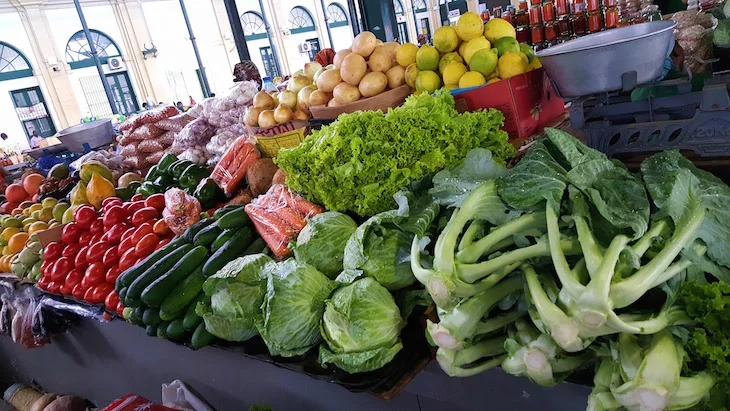
In contrast, lower prices for products such as cabbage, leafy greens, tomatoes and butter beans helped contain inflation. Prices fell by 3.9%, 6.3%, 2.4% and 1.1%, respectively.
Despite the monthly increase, year-on-year inflation, which compares prices with the same period a year earlier, declined from 6.45% in August to 6.31% in September. Meanwhile, cumulative inflation since January rose from 4.83% to 4.99%.
Transport and food and non-alcoholic beverages remain among the main sources of price pressure. On a year-on-year basis, these categories recorded increases of 14.72% and 8.69%, respectively. They contributed 2.09 and 1.55 percentage points to cumulative inflation.
An analysis by data collection centre shows that only Chimoio and Tete recorded deflation in September, with price decreases of 0.17% and 0.05%, respectively. Prices rose in the other areas surveyed, led by Beira, where they increased by 0.43%, followed by Inhambane, at 0.37%, and Xai-Xai, at 0.32%.
Maputo recorded monthly inflation of 0.19%, while Nampula registered the smallest increase among the centres with positive price changes, at 0.04%.
Since the beginning of the year, Xai-Xai has recorded the highest cumulative inflation rate, at 6.93%, followed by Tete at 6.85% and Inhambane at 6.36%. Maputo recorded the lowest cumulative rate, at 3.65%.
On a year-on-year basis, Tete continued to register the highest inflation rate, at 9.35%, followed by Inhambane at 8.56% and Xai-Xai at 8.33%. Maputo recorded the lowest rate, at 4.14%.
In 2025, prices in Mozambique rose by 3.23%, according to previous INE data. In 2024, cumulative inflation stood at 4.15%, below the 5.3% recorded in 2023.
Meanwhile, the Bank of Mozambique recently kept its benchmark monetary policy rate, known as MIMO, unchanged at 9.25%, maintaining its forecast that inflation will remain in single digits over the medium term.