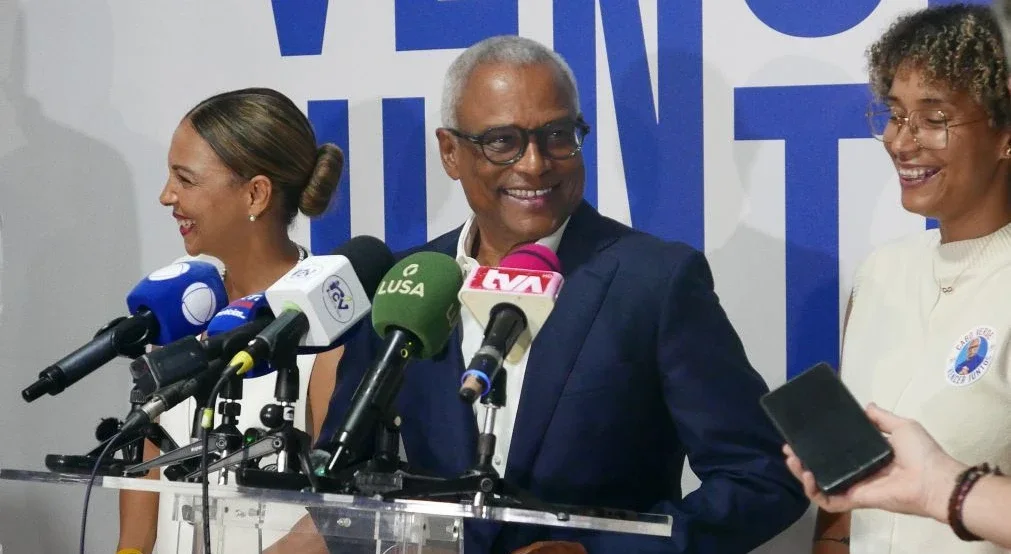
According to provisional results released by the National Electoral Commission (CNE), with 96.8% of polling stations counted, José Maria Neves secured 63.8% of the vote, representing 80,018 ballots, comfortably defeating his main opponent, former Justice Minister Joana Rosa, who received 31.6%, equivalent to 39,660 votes.
The 66-year-old incumbent President ran with the support of the African Party for the Independence of Cape Verde (PAICV), while Joana Rosa was backed by the Movement for Democracy (MpD), the country's main opposition party. His first-round victory allows him to continue serving as Head of State, a position he has held since 2021.
Speaking at his campaign headquarters in the capital, Praia, the re-elected President described the result as a "great victory", highlighting the confidence voters had placed in his candidacy.
"We won with nearly 64%, which is, by every measure, an excellent victory in these presidential elections," Neves said, while also acknowledging the other candidates for their civic participation in the electoral process.
The President pledged to continue promoting national unity, committing himself to representing all Cape Verdeans, both those living across the islands and those residing abroad. He also reaffirmed his commitment to democracy, fundamental freedoms and the rule of law.
On economic and social matters, José Maria Neves expressed his intention to encourage more inclusive and sustainable growth, aimed at improving wages and household incomes, while strengthening Cape Verde's international reputation as a peaceful and stable country.
Despite his victory, the election was overshadowed by a high abstention rate. Of approximately 419,000 registered voters, around 68% did not cast their ballots, a significant increase from the 52% recorded during the 2021 presidential election.
In response, the re-elected President called for a comprehensive study into the reasons behind low voter participation, identifying emigration and internal movement between the islands as possible factors contributing to difficulties in updating electoral registers.
José Maria Neves also suggested introducing electronic voting as a potential measure to encourage greater participation in future elections, particularly among Cape Verdeans living abroad.
Before becoming President, José Maria Neves served as a local government official, Member of Parliament and Prime Minister for 15 years, from 2001 to 2016. His re-election continues Cape Verde's political tradition of granting a second term to incumbent Presidents who seek re-election.
The final results are expected to be announced by the electoral authorities once the counting and verification process is completed, although the provisional figures already establish José Maria Neves as the first-round winner.